

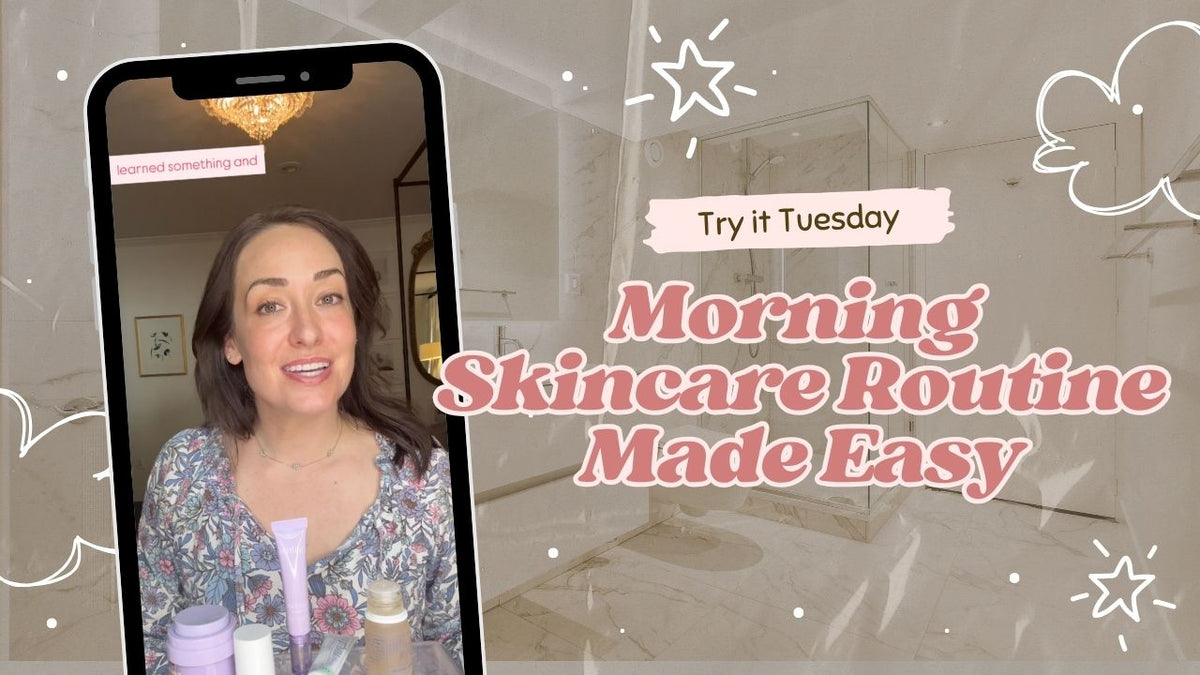
Shop the products I used in this video here.
If you’ve ever stood in front of your bathroom mirror wondering which serum goes first, whether you need three different moisturizers, or if you’re supposed to wash your face before you’ve even had coffee… you’re not alone.
Skincare can get overwhelming pretty quickly. There are so many products, ingredients, and routines floating around that it’s easy to feel like you’re missing a step or using the wrong thing. But here’s your reminder: a good skincare routine is less about having the perfect products and more about knowing what your skin needs and using your products consistently.
Let’s walk through a simple morning routine and break down what each step actually does.
First things first: Do you have to wash your face in the morning?
Surprise! Not necessarily.
If your skin tends to feel dry or tight when you wake up, you may not need a morning cleanser. A quick rinse with water might be all you need before moving on to your skincare. Everyone’s skin is different, so pay attention to how yours feels instead of automatically following a 10-step routine you saw online.
The goal is to find a routine that works for your skin, not to add steps just because you think you should.
Step 1: Vitamin C serum
I am currently using the Mimetique Skin Revive Soothing Face Serum
Vitamin C is a popular morning skincare ingredient for good reason. It’s an antioxidant that helps protect skin from environmental stressors and can support a brighter, more even-looking complexion.
Apply your vitamin C serum first after cleansing or rinsing, following the directions for your particular product. Gently pat it into your skin and give it a moment to settle.
And no, you don’t need five different brightening products to get started. One well-chosen product is a perfectly good place to begin.
Step 2: Eye cream
Next up: eye cream! I've got the Mimetique CTRL Eye Soothing Cream on deck.
Use a small amount and gently tap it around the eye area rather than rubbing or tugging at the skin. It can help moisturize this delicate area, and depending on the formula, it may also help with the appearance of puffiness or fine lines.
A little goes a long way here. Your under-eyes do not need to be swimming in product.
Step 3: Your treatment serum
This is where you can personalize your routine. I'm rotating between Alpyn Beauty's 3-in- Barrier Repair Serum and Dr. Idriss' Major Fade Hyper Serum.
Maybe you’re working on uneven skin tone or dark spots after a summer spent outdoors. Maybe your skin feels dry, sensitive, or like its barrier needs a little extra support. Your treatment step should reflect your current skin concerns.
For example, a serum formulated for discoloration may help improve the appearance of dark spots over time, while a barrier-supporting serum may be a better fit when your skin needs extra hydration and support.
My favorite approach? Choose one main concern, pick a product that addresses it, and give it time to work. You don’t need to open every serum in your cabinet at once. Using one product consistently makes it easier to see how your skin responds, too.
And remember, serums can have different textures. Some feel almost like a lightweight moisturizer, but that doesn't necessarily mean they replace your moisturizer.
Step 4: Moisturizer
Now it’s time to seal in some hydration. You only have to use one, but I'm showing you two, because options! I've loved both Dr. Idriss' Major Fade Active Seal Moisturizer and Mimetique's Skin Restore Firming and Hydrating Face Cream.
Morning moisturizers come in all kinds of textures, from lightweight gels to richer creams. A gel moisturizer can be a great option if you prefer something light under sunscreen or makeup, while a thicker cream may feel more comfortable if your skin is dry or the weather is colder.
You also don’t necessarily need two moisturizers. Some routines benefit from layering, while others work beautifully with one. Let your skin's needs, your products, and how they feel together guide you.
The goal is comfortable, hydrated skin—not the world's longest skincare routine.
Step 5: Sunscreen (the step you don't want to skip!)
Last, but absolutely not least, is sunscreen.
Apply a broad-spectrum sunscreen with SPF 30 or higher as the final step in your morning skincare routine, following the product's directions. Use enough to cover your face and other exposed skin, and reapply as directed, especially when spending time outdoors.
If you're working on dark spots or uneven skin tone, sun protection is particularly important because UV exposure can worsen discoloration and make it harder to maintain your progress.
Think of sunscreen as the finishing touch that helps protect the work you’re putting into the rest of your routine.
The biggest takeaway? Keep it simple.
You do not need a bathroom counter full of products to take good care of your skin. Start with the basics: cleanse or rinse as needed, use your treatment products, moisturize, and protect your skin with sunscreen in the morning.
From there, you can adjust based on your skin type, the season, your environment, and the concerns you want to address.
And one more thing: just because a product is popular, expensive, or gifted to someone online doesn't automatically mean it's right for you. The products featured in this routine are just examples of how different steps can fit together. Skincare should feel like something you're doing for yourself, not another thing you're falling behind on.
Start with what you have, keep your routine manageable, and give your skin a little consistency. You can always build from there!


