

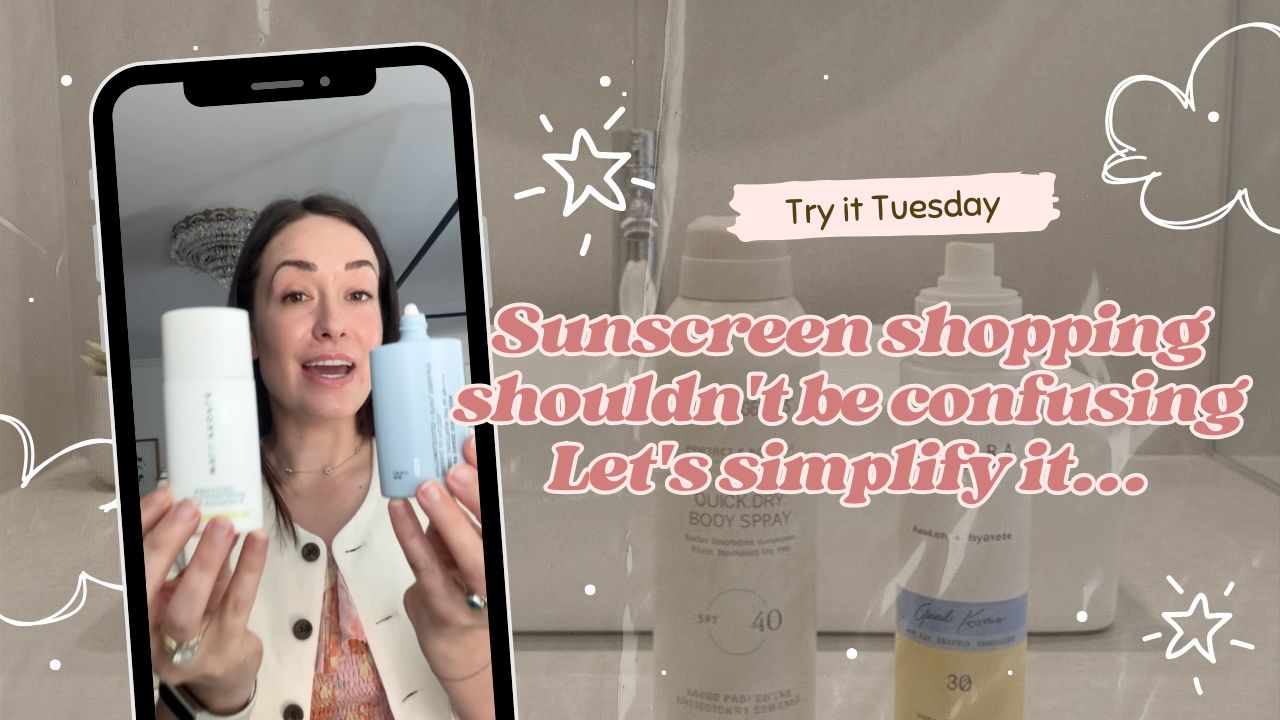
I went down a couple sunscreen aisles while shopping recently, and ended up coming across three new ones to try. Keep in mind these are three different options: a lightweight chemical sunscreen, a 100% mineral sunscreen, and a tinted mineral sunscreen with more coverage. And honestly? It turned into a really good reminder that the "best" sunscreen isthe one you'll actually enjoy wearing.
The first product I tested was the Prequel Sun Barrier Sunscreen. One thing that stood out immediately was how much less tinted it was than I expected. If you've seen photos online, you might assume it has noticeable coverage, but in real life it’s much more subtle. Instead of acting like makeup, it gives the skin a healthy, radiant finish.
What makes this sunscreen interesting is that it contains ingredients that help calm the skin. In skincare, "calming" ingredients often help reduce the appearance of redness, which is why I frequently recommend products like this for sensitive or easily flushed skin.
This also led to a great teaching moment about the difference between chemical and mineral sunscreens.
If you're looking at ingredient lists, mineral sunscreens rely primarily on zinc oxide (and sometimes titanium dioxide) to provide broad-spectrum protection. Zinc oxide covers a large range of UV rays on its own, which is why mineral formulas often have shorter active ingredient lists.
Chemical sunscreens work differently. They use multiple UV filters to achieve broad-spectrum protection, so you'll usually see several active ingredients listed. Neither approach is inherently better—it's really about finding the formula that works best for your skin type, lifestyle, and preferences.
Then I tested the Well People Day Gleamer SPF 34, which is a 100% mineral sunscreen. This one surprised me. It was lightweight, easy to spread, and didn't have much of a scent at all. Sometimes mineral sunscreens get a reputation for feeling heavy or chalky, but this formula felt comfortable and wearable.
I was especially intrigued by the subtle glow it gave the skin. Not tinted, not makeup-like—just a little extra brightness that made my skin look healthier and more awake. For a random Target find, I was genuinely impressed.
If you're someone who prefers mineral sunscreen and wants SPF 30 or higher, this could be a really solid option to explore.
Finally, I had to compare a tinted sunscreen against one of my longtime favorites. I've been an Alastin Hydratint fan for years, but I'm always open to trying products that might compete with my personal gold standard.
Enter Merit SPF 45.
This formula uses zinc oxide as its active ingredient, but unlike the others, it provides noticeable coverage. It sits somewhere between skincare and makeup, making it a great option for days when you want to even out your skin tone while still getting sun protection.
I can absolutely see why so many people love it. The coverage looked natural, the formula layered beautifully, and it felt comfortable throughout wear.
The biggest lesson from this sunscreen comparison? There isn't one perfect sunscreen for everyone.
Some days you may want something completely invisible. Some days you may want a dewy mineral formula. And some days you may want enough tint that you can skip foundation altogether.
The goal isn't finding the trendiest sunscreen—it's finding one you'll happily wear every single day. Because the sunscreen that gets used consistently will always outperform the "perfect" sunscreen sitting in a drawer.


